Buy my-socks.com ?
We are moving the project
my-socks.com .
Are you interested in purchasing the domain
my-socks.com ?
domain@kv-gmbh.de · 0541-91531010
Buy my-socks.com ?
What is Physics 1146?
Physics 1146 is a course that covers the principles of physics with a focus on mechanics, thermodynamics, and waves. It is designed to provide students with a foundational understanding of these fundamental concepts and their applications. The course typically includes lectures, laboratory work, and problem-solving exercises to help students develop a strong grasp of the material. Physics 1146 is often a prerequisite for more advanced physics courses and is commonly taken by students majoring in physics, engineering, or other related fields. **
What is the difference between a power take-off shaft and a drive shaft?
A power take-off (PTO) shaft is a type of drive shaft that transfers power from a vehicle's engine to an attachment or implement, such as a pump or generator. The main difference between a PTO shaft and a regular drive shaft is that a PTO shaft is specifically designed to transfer power to external equipment, while a drive shaft is typically used to transfer power within a vehicle's transmission or between different components of a vehicle. Additionally, PTO shafts are often detachable and can be connected and disconnected as needed, whereas a drive shaft is a permanent component of a vehicle's drivetrain. **

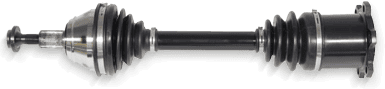
Similar search terms for MAXGEAR-49-1146-Drive-shaft
Top-Angebote
Products related to MAXGEAR-49-1146-Drive-shaft:
-
MAXGEAR 49-0925 Drive shaftExternal Toothing wheel side: 22; Internal Gearing Diff. Side (connecting shaft connection): 33; Length [mm]: 515; Diameter 1 [mm]: 81; Diameter 2 [mm]: 92; Fitting Position: Front Axle Left; Braking/Driving Dynamics: for vehicles without ABS; Transmission Type: Automatic Transmission127,99 £*Shipping: 8,45 £Secure redirect to the provider
-
MAXGEAR 49-1810 Drive shaftExternal Toothing differential side: 25; External Toothing wheel side: 33; Length [mm]: 578; Length 2 [mm]: 78, 78,1; Transmission-sided joint diameter [mm]: 94; Wheel-sided joint diameter [mm]: 91; Thread Size: M22x1,5; Dust Cover: without dust cover; Fitting Position: Front Axle Left; Transmission Type: Manual Transmission; Construction Year to: 12/2013, 10/2010, 12/2012, 12/2011, 03/2011, 06/2010148,99 £*Shipping: 1,99 £Secure redirect to the provider
-
MAXGEAR 49-1824 Drive shaftExternal Toothing differential side: 39; External Toothing wheel side: 27; Length [mm]: 697; Transmission-sided joint diameter [mm]: 88, 88,00; Wheel-sided joint diameter [mm]: 102; Thread Size: M22x1,5; Fitting Position: Front Axle Left, Front Axle; Transmission Code: PF6; Transmission Type: Manual Transmission, Automatic Transmission; Construction Year from: 08/2006189,99 £*Shipping: 1,99 £Secure redirect to the provider
-
MAXGEAR 49-1867 Drive shaftFitting Position: Front Axle Left; External Toothing differential side: 22; External Toothing wheel side: 22; Length [mm]: 591; Length 2 [mm]: 57; Transmission-sided joint diameter [mm]: 75; Wheel-sided joint diameter [mm]: 81,4; ABS-Ring Diameter [mm]: 78; Number of Teeth, ABS ring: 29; Braking/Driving Dynamics: for vehicles with ABS; Manufacturer Restriction: DELPHI135,99 £*Shipping: 1,99 £Secure redirect to the provider


-
Why are there no simple motorcycles with shaft drive or belt drive?
There are no simple motorcycles with shaft drive or belt drive because these systems are more complex and expensive to manufacture compared to chain drive systems. Chain drives are simpler, lighter, and more cost-effective, making them the preferred choice for most motorcycles. Additionally, chain drives offer easier maintenance and customization options, which are important factors for many motorcycle enthusiasts. Overall, the simplicity and efficiency of chain drives make them the more popular choice in the motorcycle industry. **
-
What is your question about Math 1146?
My question about Math 1146 is related to the concept of limits and continuity. I am struggling to understand how to determine the limit of a function as it approaches a specific value, and how to determine if a function is continuous at a given point. I would like to know more about the techniques and strategies for solving problems related to limits and continuity in Math 1146. **
-
How to calculate the moment of inertia of the drive shaft?
To calculate the moment of inertia of the drive shaft, you need to know the mass of the shaft and its distribution along its length. The moment of inertia can be calculated using the formula I = ∫r^2 dm, where r is the distance from the axis of rotation to the element of mass dm. By integrating this formula over the entire length of the shaft, you can determine the moment of inertia of the drive shaft. Alternatively, you can also use the parallel axis theorem to calculate the moment of inertia if the shaft is not rotating about its center of mass. **
-
Can you drive a car only wearing socks?
It is not safe or legal to drive a car only wearing socks. Proper footwear is necessary to ensure you have the necessary control and grip on the pedals while driving. Wearing socks alone can increase the risk of slipping and losing control of the vehicle, putting yourself and others in danger. It is always recommended to wear appropriate footwear while driving. **

Can you drive a car only with socks?
No, it is not safe or legal to drive a car only with socks. Proper footwear, such as closed-toe shoes, is necessary to operate a vehicle safely. Socks do not provide the necessary support and protection for driving, and they can also slip on the pedals, increasing the risk of accidents. It is important to wear appropriate footwear while driving to ensure the safety of yourself and others on the road. **
How do you calculate the moment of inertia of the drive shaft?
The moment of inertia of a drive shaft can be calculated using the formula for the moment of inertia of a solid cylinder, which is \( I = \frac{1}{2} m r^2 \), where \( m \) is the mass of the shaft and \( r \) is the radius of the shaft. If the drive shaft is not a solid cylinder, the moment of inertia can be calculated by summing the moments of inertia of its individual components using the parallel axis theorem. This involves calculating the moment of inertia of each component about its own center of mass and then adding the mass of each component multiplied by the square of the distance between its center of mass and the axis of rotation. **
Top-Angebote
Products related to MAXGEAR-49-1146-Drive-shaft:
-
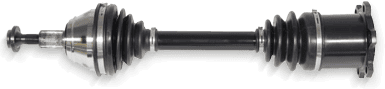
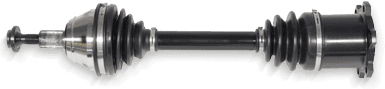
MAXGEAR 49-1146 Drive shaftExternal Toothing wheel side: 22; Length [mm]: 932; Diameter 1 [mm]: 81; Number of Teeth, ABS ring: 29; Fitting Position: Front Axle Right; Transmission Type: Manual Transmission; Transmission Code: F06;F25; Braking/Driving Dynamics: for vehicles with ABS, for vehicles without ABS; Vehicle Identification Number (VIN) from: 23000001; Construction Year from: 09/2000, 01/2004, 01/2006; Construction Year to: 09/2006141,99 £*Shipping: 8,45 £Secure redirect to the provider
-
MAXGEAR 49-0869 Drive shaftFitting Position: Front Axle Left; External Toothing wheel side: 33; Internal Toothing wheel side: 30; Length [mm]: 596; Number of Teeth, ABS ring: 45; Paired product: 49-0506, 100 498 0671; Engine Code: 1Z, AFN, AGZ, AJM, AFF; Transmission Code: MT; Vehicle Identification Number (VIN) from: 3B-V-000001; Transmission Type: 5-Speed Manual Transmission, Manual Transmission152,99 £*Shipping: 1,99 £Secure redirect to the provider
-
MAXGEAR 49-0925 Drive shaftExternal Toothing wheel side: 22; Internal Gearing Diff. Side (connecting shaft connection): 33; Length [mm]: 515; Diameter 1 [mm]: 81; Diameter 2 [mm]: 92; Fitting Position: Front Axle Left; Braking/Driving Dynamics: for vehicles without ABS; Transmission Type: Automatic Transmission127,99 £*Shipping: 8,45 £Secure redirect to the provider
-
MAXGEAR 49-1810 Drive shaftExternal Toothing differential side: 25; External Toothing wheel side: 33; Length [mm]: 578; Length 2 [mm]: 78, 78,1; Transmission-sided joint diameter [mm]: 94; Wheel-sided joint diameter [mm]: 91; Thread Size: M22x1,5; Dust Cover: without dust cover; Fitting Position: Front Axle Left; Transmission Type: Manual Transmission; Construction Year to: 12/2013, 10/2010, 12/2012, 12/2011, 03/2011, 06/2010148,99 £*Shipping: 1,99 £Secure redirect to the provider
-
What is Physics 1146?
Physics 1146 is a course that covers the principles of physics with a focus on mechanics, thermodynamics, and waves. It is designed to provide students with a foundational understanding of these fundamental concepts and their applications. The course typically includes lectures, laboratory work, and problem-solving exercises to help students develop a strong grasp of the material. Physics 1146 is often a prerequisite for more advanced physics courses and is commonly taken by students majoring in physics, engineering, or other related fields. **
-
What is the difference between a power take-off shaft and a drive shaft?
A power take-off (PTO) shaft is a type of drive shaft that transfers power from a vehicle's engine to an attachment or implement, such as a pump or generator. The main difference between a PTO shaft and a regular drive shaft is that a PTO shaft is specifically designed to transfer power to external equipment, while a drive shaft is typically used to transfer power within a vehicle's transmission or between different components of a vehicle. Additionally, PTO shafts are often detachable and can be connected and disconnected as needed, whereas a drive shaft is a permanent component of a vehicle's drivetrain. **
-
Why are there no simple motorcycles with shaft drive or belt drive?
There are no simple motorcycles with shaft drive or belt drive because these systems are more complex and expensive to manufacture compared to chain drive systems. Chain drives are simpler, lighter, and more cost-effective, making them the preferred choice for most motorcycles. Additionally, chain drives offer easier maintenance and customization options, which are important factors for many motorcycle enthusiasts. Overall, the simplicity and efficiency of chain drives make them the more popular choice in the motorcycle industry. **
-
What is your question about Math 1146?
My question about Math 1146 is related to the concept of limits and continuity. I am struggling to understand how to determine the limit of a function as it approaches a specific value, and how to determine if a function is continuous at a given point. I would like to know more about the techniques and strategies for solving problems related to limits and continuity in Math 1146. **
Similar search terms for MAXGEAR-49-1146-Drive-shaft
-
MAXGEAR 49-1824 Drive shaftExternal Toothing differential side: 39; External Toothing wheel side: 27; Length [mm]: 697; Transmission-sided joint diameter [mm]: 88, 88,00; Wheel-sided joint diameter [mm]: 102; Thread Size: M22x1,5; Fitting Position: Front Axle Left, Front Axle; Transmission Code: PF6; Transmission Type: Manual Transmission, Automatic Transmission; Construction Year from: 08/2006189,99 £*Shipping: 1,99 £Secure redirect to the provider
-
MAXGEAR 49-1867 Drive shaftFitting Position: Front Axle Left; External Toothing differential side: 22; External Toothing wheel side: 22; Length [mm]: 591; Length 2 [mm]: 57; Transmission-sided joint diameter [mm]: 75; Wheel-sided joint diameter [mm]: 81,4; ABS-Ring Diameter [mm]: 78; Number of Teeth, ABS ring: 29; Braking/Driving Dynamics: for vehicles with ABS; Manufacturer Restriction: DELPHI135,99 £*Shipping: 1,99 £Secure redirect to the provider
-
MAXGEAR 49-1871 Drive shaftFitting Position: Front Axle Left; External Toothing differential side: 37; External Toothing wheel side: 25; Length [mm]: 593; Length 2 [mm]: 68; Transmission-sided joint diameter [mm]: 85; Wheel-sided joint diameter [mm]: 91,4; Transmission Code: AM6181,99 £*Shipping: 1,99 £Secure redirect to the provider
-
MAXGEAR 49-2373 Drive shaftFitting Position: Front Axle Right; External Toothing differential side: 36; External Toothing wheel side: 28; Supplementary Article / Supplementary Info Info 2: with bearing(s); Length [mm]: 1057; Length 2 [mm]: 308; Transmission-sided joint diameter [mm]: 106; Wheel-sided joint diameter [mm]: 91; ABS-Ring Diameter [mm]: 105; Number of Teeth, ABS ring: 48; Construction Year from: 05/2004, 07/2003, 06/2004; Vehicle type: Transit260, Transit280, Transit300, Transit330, Transit350; Braking/Driving Dynamics: for vehicles with ABS; Transmission Type: Manual Transmission; Construction Year to: 03/2004171,99 £*Shipping: 1,99 £Secure redirect to the provider
-
How to calculate the moment of inertia of the drive shaft?
To calculate the moment of inertia of the drive shaft, you need to know the mass of the shaft and its distribution along its length. The moment of inertia can be calculated using the formula I = ∫r^2 dm, where r is the distance from the axis of rotation to the element of mass dm. By integrating this formula over the entire length of the shaft, you can determine the moment of inertia of the drive shaft. Alternatively, you can also use the parallel axis theorem to calculate the moment of inertia if the shaft is not rotating about its center of mass. **
-
Can you drive a car only wearing socks?
It is not safe or legal to drive a car only wearing socks. Proper footwear is necessary to ensure you have the necessary control and grip on the pedals while driving. Wearing socks alone can increase the risk of slipping and losing control of the vehicle, putting yourself and others in danger. It is always recommended to wear appropriate footwear while driving. **
-
Can you drive a car only with socks?
No, it is not safe or legal to drive a car only with socks. Proper footwear, such as closed-toe shoes, is necessary to operate a vehicle safely. Socks do not provide the necessary support and protection for driving, and they can also slip on the pedals, increasing the risk of accidents. It is important to wear appropriate footwear while driving to ensure the safety of yourself and others on the road. **
-
How do you calculate the moment of inertia of the drive shaft?
The moment of inertia of a drive shaft can be calculated using the formula for the moment of inertia of a solid cylinder, which is \( I = \frac{1}{2} m r^2 \), where \( m \) is the mass of the shaft and \( r \) is the radius of the shaft. If the drive shaft is not a solid cylinder, the moment of inertia can be calculated by summing the moments of inertia of its individual components using the parallel axis theorem. This involves calculating the moment of inertia of each component about its own center of mass and then adding the mass of each component multiplied by the square of the distance between its center of mass and the axis of rotation. **
* All prices are inclusive of VAT and, if applicable, plus shipping costs. The offer information is based on the details provided by the respective shop and is updated through automated processes. Real-time updates do not occur, so deviations can occur in individual cases. ** Note: Parts of this content were created by AI.